
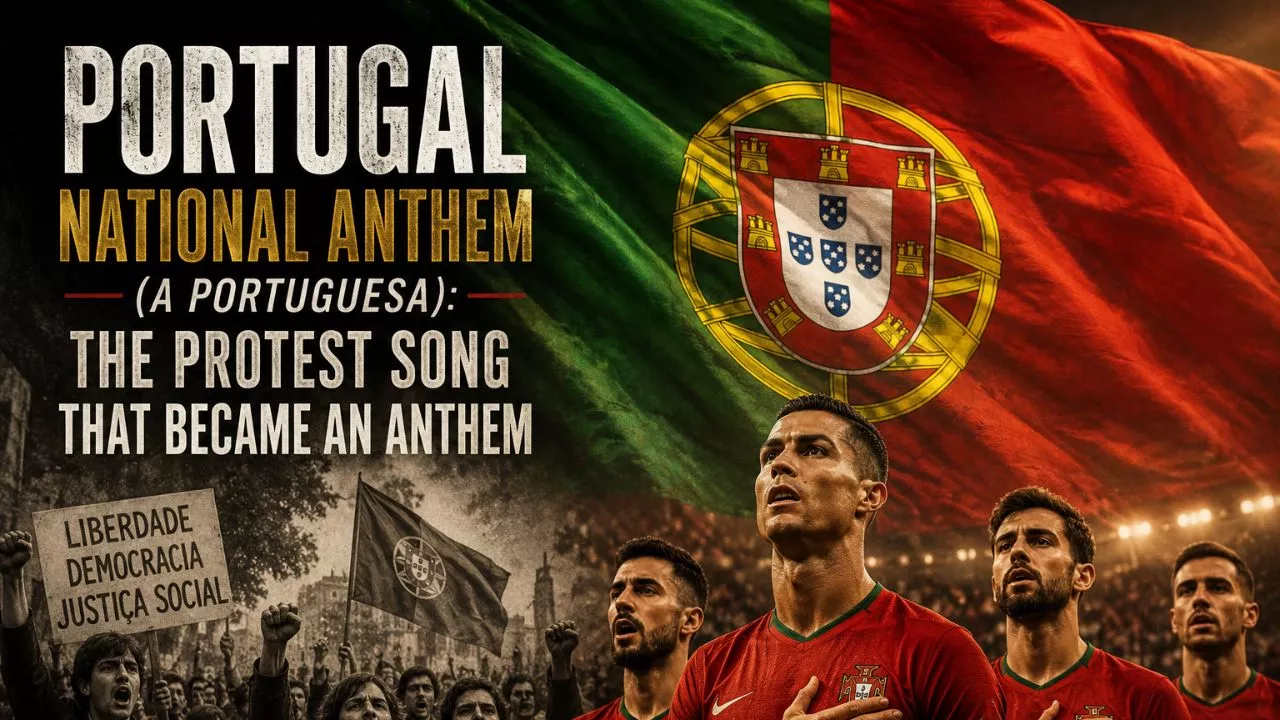
As Cristiano Ronaldo and Portugal open their 2026 World Cup campaign, they’ll belt out “A Portuguesa” — an anthem that was literally born as an act of protest, complete with a lyric the country quietly changed for diplomatic reasons.
| Anthem | A Portuguesa |
| Music | Alfredo Keil |
| Lyrics | Henrique Lopes de Mendonça (1890) |
| Adopted | 1911 |
| Refrain | “Às armas, às armas!” |
| Language | Portuguese |
A Protest Song Against an Ultimatum
“A Portuguesa” was written in 1890 as a furious response to the British Ultimatum, which forced Portugal to back down over its African territories. The song channeled national outrage, became a republican rallying cry, and after the monarchy fell it was adopted as the official anthem in 1911.
The Lyric They Changed
The original refrain called the nation to march “contra os bretões” — literally “against the British.” As relations normalized, that line was softened to “contra os canhões” (“against the cannons”). Same fire, fewer diplomatic incidents.
What It Means
The lyrics summon “Heroes of the sea, noble people” to rise for the homeland — a proud nod to Portugal’s age of exploration. Full story on Wikipedia.
More World Cup 2026 Anthems & Music
More World Cup 2026 national anthems: Mexico · USA · Canada · Brazil. See also our history of every World Cup anthem (1962–2026) and who sings the official World Cup 2026 song.
Portugal, Ronaldo and One Last Dance
Portugal travel to North America with a squad blending superstar experience and exciting young talent — and with Cristiano Ronaldo likely playing in his final World Cup, the emotional stakes are sky-high from the very first anthem.
“A Portuguesa” suits that intensity perfectly. It was born as a defiant protest song, and Portuguese players sing it like one — chests out, voices raised. Expect the famous ‘Siuuu’ celebration to follow not long after kickoff.
“A Portuguesa” didn’t just become the anthem by chance — it was the soundtrack of the 1910 revolution that ended the Portuguese monarchy, which is why it was adopted the following year. Few anthems are this directly tied to a change of regime.
Modern Portugal has finally matched that fighting spirit with silverware, winning Euro 2016 and the UEFA Nations League. With Cristiano Ronaldo chasing the one trophy that’s eluded him, the 2026 anthem will be sung with real emotion.
Frequently Asked Questions
What is Portugal’s national anthem called?
It’s “A Portuguesa,” with music by Alfredo Keil and lyrics by Henrique Lopes de Mendonça, adopted in 1911.
Why was A Portuguesa written?
It was written in 1890 as a protest against the British Ultimatum and became a republican rallying song.
What lyric was changed in the anthem?
The original line ‘contra os bretões’ (against the British) was changed to ‘contra os canhões’ (against the cannons).
What does A Portuguesa mean?
It calls the ‘heroes of the sea’ to rise for the homeland, celebrating Portuguese pride and history.