
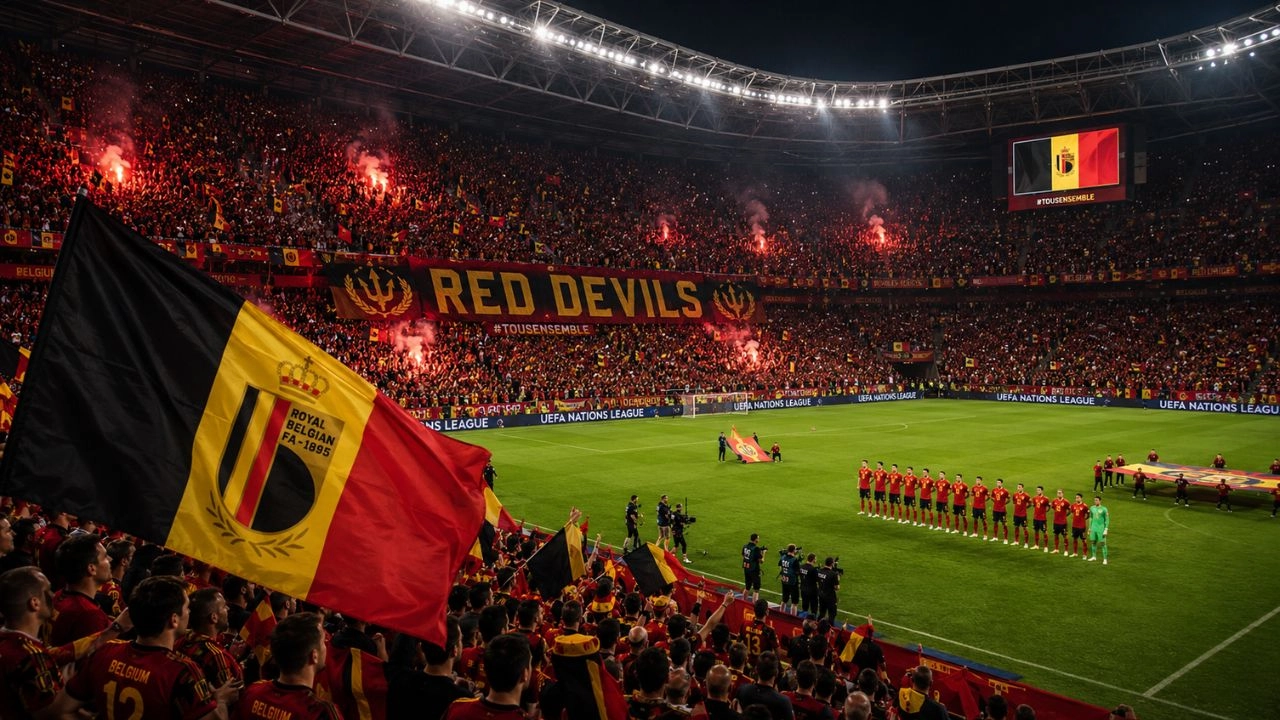
When Belgium’s Red Devils face Egypt on June 15, their anthem comes with a uniquely Belgian twist: “La Brabançonne” is sung in three languages. Here’s the revolutionary story behind it and what it means.
| Anthem | La Brabançonne |
| Written | 1830 (Belgian Revolution) |
| Music | François van Campenhout |
| Original Lyrics | “Jenneval” (Alexandre Dechet) |
| Languages | French, Dutch & German |
Born in a Revolution
“La Brabançonne” was written in 1830, in the heat of the Belgian Revolution that won the country independence from the Netherlands. Its name nods to the historic region of Brabant. It’s a young, fiery anthem compared to its centuries-old neighbors.
Sung in Three Languages
Belgium has three official language communities — French, Dutch (Flemish) and German — and the anthem reflects that. There are official versions in all three, and on big occasions you’ll even hear a blended version that switches languages mid-song.
What It Means
The lyrics celebrate Belgium’s hard-won freedom, its king, and the rule of law, ending on the proud refrain about the country’s unity. More on Wikipedia.
More World Cup 2026 Anthems & Music
More World Cup 2026 national anthems: Mexico · USA · Canada · Brazil. See also our history of every World Cup anthem (1962–2026) and who sings the official World Cup 2026 song.
Belgium’s Red Devils
Belgium’s “golden generation” turned the Red Devils into a fixture near the top of the world rankings, and they remain one of the most watchable teams around. They begin their 2026 group campaign against Egypt on June 15.
“La Brabançonne” is a neat symbol of the country it represents: switching between French, Dutch and German, it asks a diverse nation to stand together for 90 minutes. When Belgium click, that unity on the pitch matches the trilingual unity of the anthem.
That trilingual identity goes deeper than symbolism. On official occasions you’ll hear a blended rendition that moves between French, Dutch and German in a single performance — a small but striking act of national unity.
On the field, Belgium spent years ranked among the very best in the world and finished third at the 2018 World Cup. The “Brabançonne” now precedes a team that expects to compete with anyone, as it does when they meet Egypt on June 15.
On the pitch, the Red Devils have spent years proving that a small, divided-on-paper nation can become a true football superpower, blending Flemish and Walloon talent into one squad. That makes “La Brabançonne” more than a formality — it’s a 90-second symbol of unity before kickoff. Hear how it compares to the host nations’ anthems and the rest of the field.
Frequently Asked Questions
What is Belgium’s national anthem called?
It’s “La Brabançonne,” written in 1830 during the Belgian Revolution.
What languages is the Belgian anthem sung in?
French, Dutch and German — Belgium’s three official languages — with an official version in each.
What does La Brabançonne mean?
It celebrates Belgium’s independence, freedom, king and unity.
Who wrote the Belgian anthem?
The music was composed by François van Campenhout, with original French lyrics attributed to ‘Jenneval’ (Alexandre Dechet).