
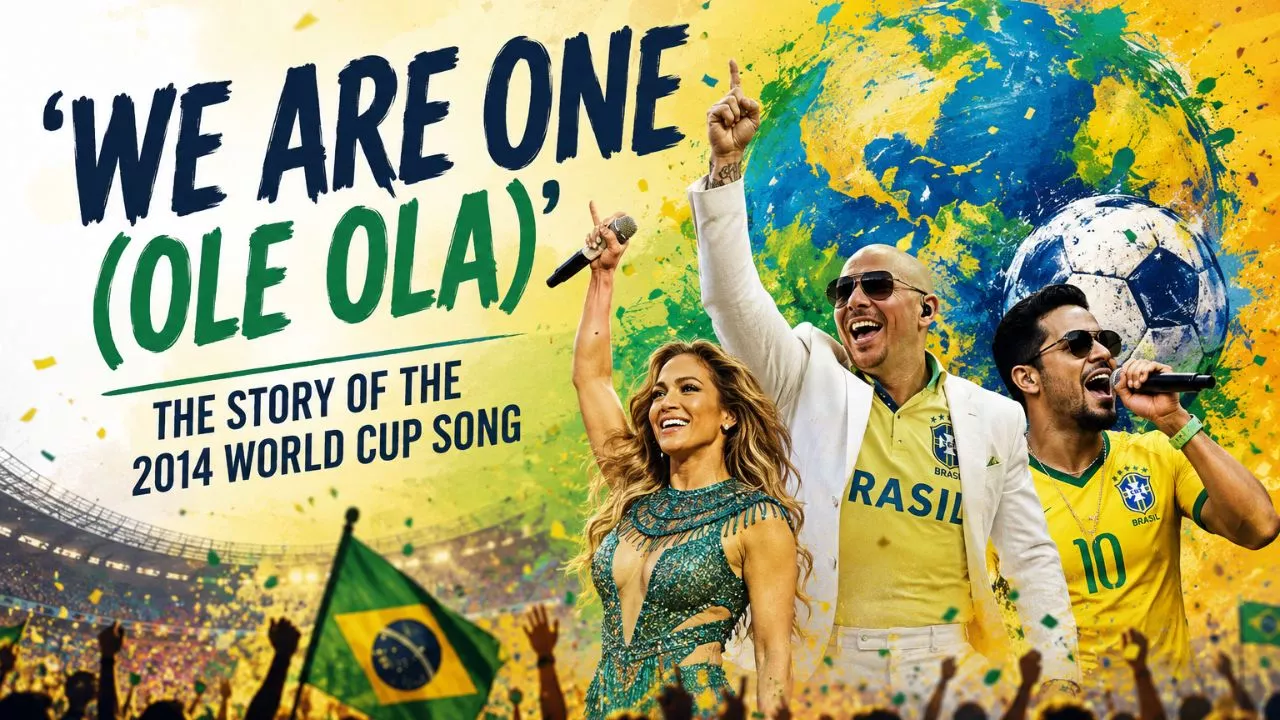
Every World Cup gets its official song, and 2014’s was “We Are One (Ole Ola)” — a star-studded party track that also became a bit of a lightning rod. With the 2026 album now out, it’s a great time to look back at Brazil’s anthem.
| Song | We Are One (Ole Ola) |
| Artists | Pitbull ft. Jennifer Lopez & Claudia Leitte |
| World Cup | 2014 (Brazil) |
| Genre | Pop / dance |
| Reception | Commercially big, critically mixed |
The Official Song of Brazil 2014
“We Are One (Ole Ola)” teamed global hitmaker Pitbull with Jennifer Lopez and Brazilian star Claudia Leitte for a glossy, radio-ready anthem performed at the 2014 opening ceremony in São Paulo.
Why It Divided Fans
Plenty of Brazilians felt the song wasn’t “Brazilian enough” — too much English, too much international pop, not enough local flavor. It’s a debate that follows nearly every World Cup song.
Its Place in World Cup Music
Love it or not, it’s a key chapter in the story of official songs. Compare it with 2010, 2018 and 2026 in our history of World Cup anthems. Full details on Wikipedia.
Related World Cup Music
Related: Wavin’ Flag (2010), Live It Up (2018), and who sings the 2026 World Cup song.
Where It Sits in the Story of World Cup Songs
“We Are One (Ole Ola)” was a commercial smash, charting around the world thanks to its A-list lineup. But it also marked a turning point in how fans talk about official songs — the moment the “is this really about the host country?” debate went fully mainstream.
Looking back, it set the template that 2026 has leaned into hard: a multi-artist, multi-genre approach designed for global radio. Compare it with Wavin’ Flag (2010) and the star-packed 2026 official album to see how far the format has traveled.
“We Are One (Ole Ola)” charted across multiple countries on the strength of its A-list cast, and FIFA even released a Portuguese-language version to answer critics who wanted more Brazilian flavor.
It also cemented Pitbull’s status as a go-to artist for global event anthems. Whatever you think of the song, it was a key step toward the multi-artist, multi-language approach that defines the 2026 official album.
It’s also worth remembering the sheer scale of the song’s platform: tied to the biggest event on earth and beamed to a TV audience in the billions, “We Are One” reached more ears in a single month than most songs manage in a lifetime. That’s the unique megaphone a World Cup hands its official song — for better or worse. Compare it with the 2026 anthem ‘DNA’.
Frequently Asked Questions
Who sang the 2014 World Cup song?
“We Are One (Ole Ola)” was performed by Pitbull featuring Jennifer Lopez and Claudia Leitte.
Why was “We Are One” criticized?
Many fans felt it wasn’t Brazilian enough, with too much English and international pop and not enough local identity.
What World Cup was “We Are One” for?
The 2014 FIFA World Cup in Brazil.
Was “We Are One” a hit?
It was a commercial success globally but received mixed reviews from critics and fans.