
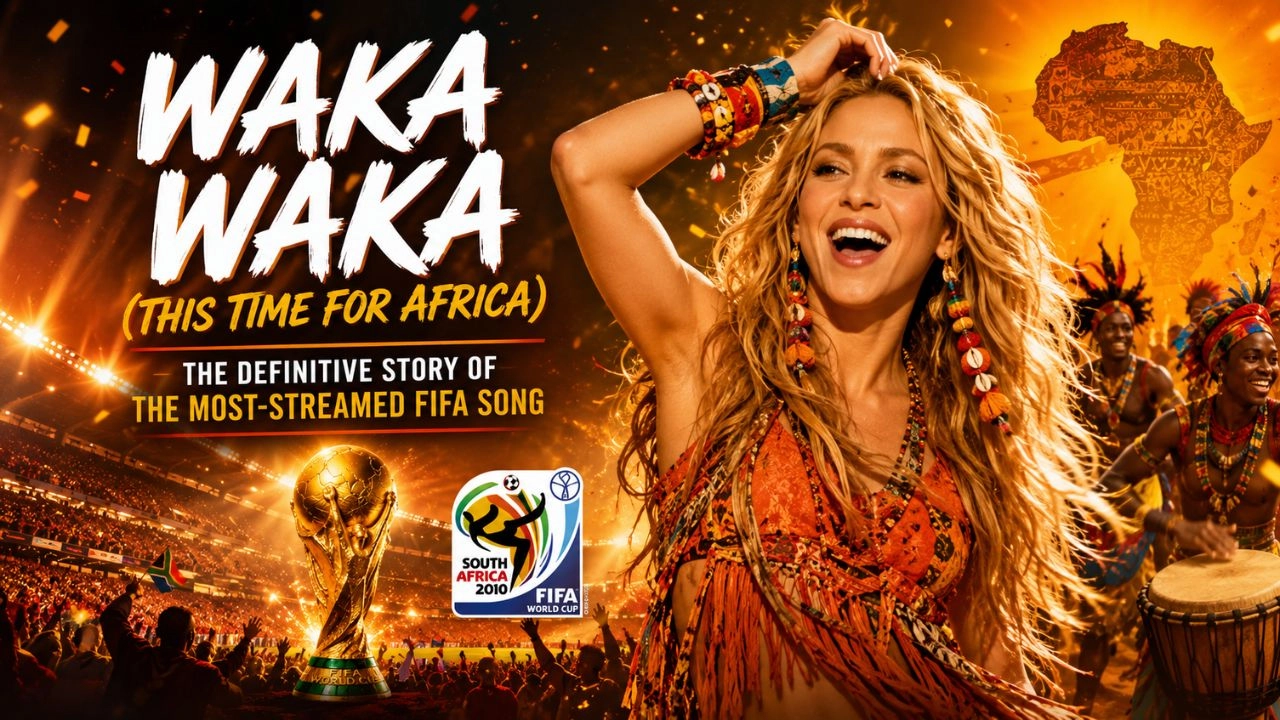
Sixteen years on, “Waka Waka” is still the song that defined an entire World Cup tournament. As someone who has now spent five years tracking the data behind every official FIFA song, I can tell you no other entry comes close. “Waka Waka (This Time for Africa)” by Shakira featuring South African Afro-fusion band Freshlyground sold over 15 million digital downloads worldwide, became the most-streamed FIFA World Cup song on Spotify (a Guinness World Record), and remains the best-selling World Cup song ever recorded.
Here is the definitive guide to how the song was made, what makes it work musically, and why it has stayed culturally relevant for over a decade.
“Waka Waka” — The Headline Facts
| Item | Detail |
|---|---|
| Song title | "Waka Waka (This Time for Africa)" |
| Artists | Shakira ft. Freshlyground |
| Tournament | 2010 FIFA World Cup South Africa |
| Release date | May 7, 2010 |
| Label | Epic Records / Sony Music Latin |
| Composers | Shakira, John Hill, Zolani Mahola, with samples credited to Zangaléwa |
| Sample source | "Zamina mina (Zangaléwa)" by Cameroon's Golden Sounds (1986) |
| Worldwide sales | 15+ million digital downloads |
| Guinness World Record | Most-streamed FIFA World Cup song on Spotify |
The Song Behind the Song: Where “Zamina mina” Came From
The most-discussed musical element of “Waka Waka” is its central chant: “Zamina mina eh eh, waka waka eh eh.” That phrase did not originate with Shakira’s song. It comes from the 1986 Cameroonian song “Zamina mina (Zangaléwa)” by the band Golden Sounds, made up of former Cameroonian Republican Guard soldiers. The original was a marching song that became a continental hit across French-speaking Africa in the late 1980s and remained popular at football matches for two decades.
Shakira’s production team licensed the sample, gave Golden Sounds songwriting credit, and built the new song around the chant. This is a critical part of what made “Waka Waka” genuinely African in flavour rather than just a Western pop record with a few African flourishes — it is structurally rooted in a beloved Cameroonian source.
The Role of Freshlyground
South African Afro-fusion band Freshlyground — led by lead vocalist Zolani Mahola — were the on-the-ground collaborators that gave the song its South African identity. They appear on the recording and in the music video, perform on the song’s extended live arrangements, and were on stage with Shakira during the official FIFA performances. The band was already one of South Africa’s most respected music acts before the World Cup; the “Waka Waka” collaboration introduced them to a global audience.
Why the Song Was Built to Work
- Foundational chant structure. The “Zamina mina” hook is repeatable, language-neutral, and works as a stadium chant. You can teach a 60,000-seat stadium to sing it in under thirty seconds.
- Bilingual vocal delivery. Shakira sings English and Spanish lines woven through the song. The bilingual structure made it travel.
- Marakatu / Soukous percussion grammar. The drum bed pulls from West African and Latin American percussion traditions simultaneously, which is part of why it worked across so many regional markets.
- Choreography that translated. The dance moves in the official music video became universally repeatable. Fan videos from every continent during 2010 used them.
- Tournament-aligned release timing. The song dropped on May 7, 2010 — about a month before the tournament kickoff — giving radio enough lead time to make it ubiquitous before the football even started.
The Numbers: Just How Big Was “Waka Waka”?
| Metric | Figure |
|---|---|
| Digital downloads (as of 2019) | 15+ million |
| Spotify streams (current) | Most-streamed FIFA song on the platform (Guinness World Record) |
| YouTube music video views | 3+ billion across all uploads of the official video |
| Countries where it charted in top 10 | 30+ |
| Latin Grammy | Nominated; the album Sale el Sol (containing the song) won Latin Grammy "Album of the Year" |
Those numbers are not just impressive for a sports-tied song. They are remarkable for any song. By comparison, the closest competitor among FIFA anthems, Ricky Martin’s “La Copa de la Vida” (1998), pre-dates the streaming era by a decade and has substantially smaller streaming numbers despite its enormous cultural reach.
The Lasting Cultural Footprint
“Waka Waka” is one of those rare songs that broke out of its commercial moment and became permanently embedded in global culture. Some examples:
- It is still the go-to soundtrack for African football celebration videos on YouTube and TikTok, 16 years after release
- The dance steps are taught in primary-school music classes in multiple African countries
- “Zamina mina” has been integrated into pop covers and remixes for years — including a Tom & Jerry-tied 2021 remake that brought the song back into mainstream consciousness
- Every subsequent FIFA anthem has been measured against it, and every subsequent FIFA anthem has fallen short of its numbers
Where to Listen to “Waka Waka”
- Spotify — the original 2010 single plus the live-from-Soccer City stadium recording
- Apple Music — both versions; the 2010 album Sale el Sol (which contains the song) has been remastered in lossless
- Amazon Music — available standard and HD
- YouTube — the official music video has over a billion views; the FIFA closing-ceremony performance is on the official FIFA YouTube channel
- Vinyl — Sale el Sol has had multiple vinyl reissues, including limited coloured pressings
- Wikipedia detail page — deep dive on the song’s production and reception
Frequently Asked Questions
Who sang “Waka Waka”?
“Waka Waka (This Time for Africa)” was performed by Shakira featuring South African Afro-fusion band Freshlyground. It is the official anthem of the 2010 FIFA World Cup South Africa.
What does “Waka Waka” mean?
“Waka waka” is a phrase from various African languages roughly meaning “do it” or “keep going.” The song’s central chant “Zamina mina, eh eh, waka waka, eh eh” is sampled from the 1986 Cameroonian song “Zamina mina (Zangaléwa)” by Golden Sounds.
How many copies of “Waka Waka” were sold?
As of 2019, “Waka Waka” had sold over 15 million digital downloads worldwide, making it one of the best-selling digital singles of all time. It remains the best-selling World Cup song in history.
Is “Waka Waka” the most-streamed FIFA song?
Yes. “Waka Waka” holds the Guinness World Record for the most-streamed FIFA World Cup song on Spotify. No subsequent FIFA anthem has come close to its streaming numbers.
Where can I listen to “Waka Waka”?
The song is available on Spotify, Apple Music, Amazon Music, YouTube Music, Tidal, and Deezer. The official music video is on Shakira’s YouTube channel with billions of views, and the FIFA closing-ceremony performance is on the official FIFA YouTube channel.
Is Shakira making another World Cup song in 2026?
Yes. Shakira is performing the official 2026 FIFA World Cup anthem “Dai Dai” with Burna Boy (released May 15, 2026) and is also co-headlining the 2026 World Cup Final halftime show alongside Madonna and BTS on July 19, 2026.
For more World Cup music history, see our soundtrack news section.