
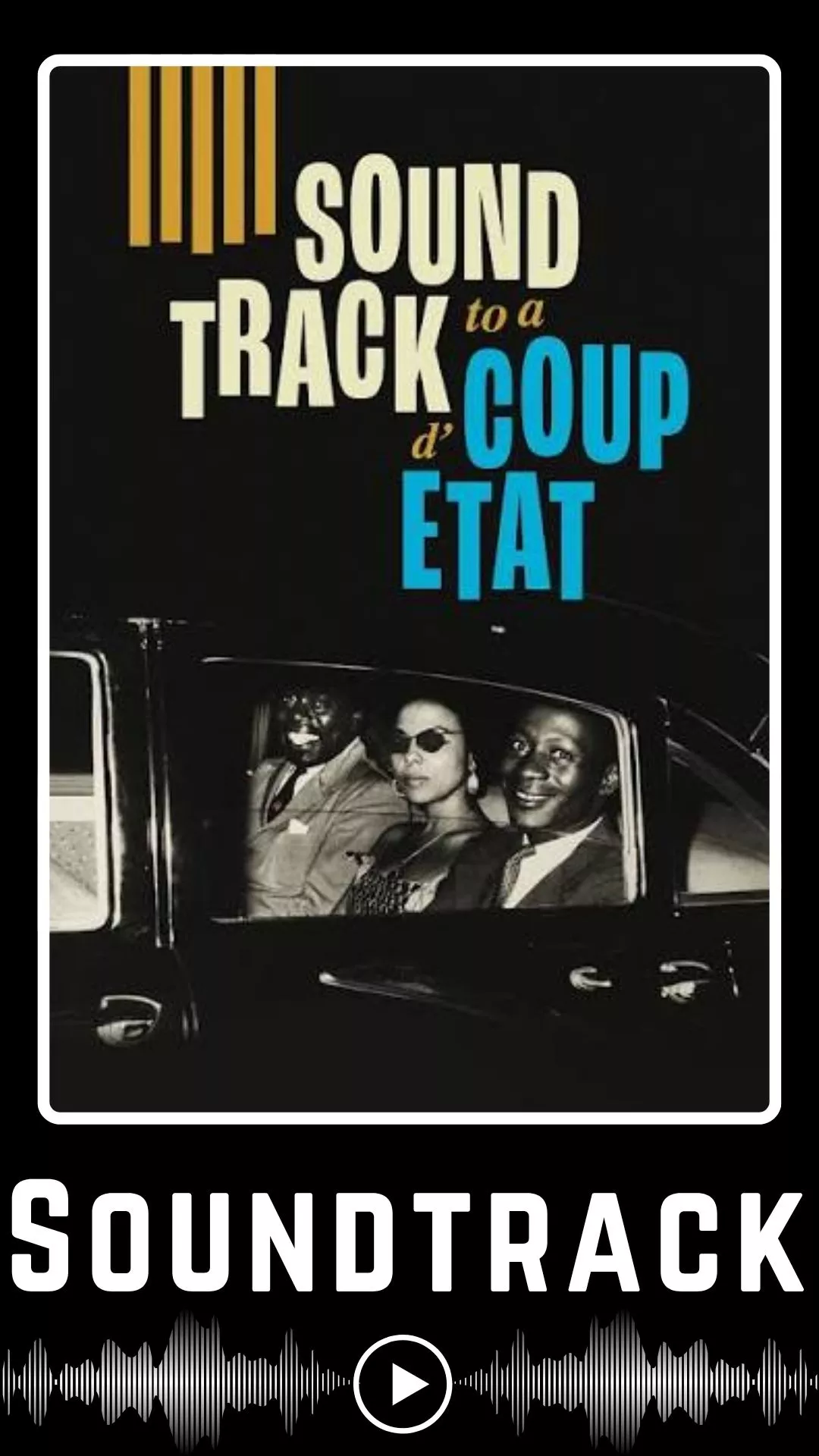
Soundtrack to a Coup d’Etat is a 2024 documentary written and directed by Belgian filmmaker Johan Grimonprez, an Oscar-nominated essay film that traces the 1961 assassination of Congolese leader Patrice Lumumba and the Cold War machinations behind it. Built around archival footage and speeches from figures including Louis Armstrong, Nina Simone, Malcolm X, Nikita Khrushchev, and Lumumba himself, the film runs on the rhythm of jazz rather than a traditional narrator.
That rhythm is the whole point. Rather than commissioning an original score, Grimonprez assembled his soundtrack almost entirely from pre-existing jazz and Congolese rumba recordings, cutting political history to the pulse of bebop, hard bop, and independence-era African music. Critics have described the result as a “jukebox documentary” — a film propelled by music, where the songs act less like background scoring and more like active commentary on the events on screen. This guide breaks down what is playing, who recorded it, and where you can listen.
Soundtrack to a Coup d’Etat Soundtrack Details
| Detail | Information |
|---|---|
| Film | Soundtrack to a Coup d’Etat |
| Director / Writer | Johan Grimonprez |
| Producers | Daan Milius, Rémi Grellety |
| Editor | Rik Chaubet |
| Sound Designer | Ranko Pauković |
| U.S. Distributor | Kino Lorber |
| Genre | Documentary / Music |
| World Premiere | January 22, 2024 (Sundance Film Festival) |
| U.S. Theatrical Release | November 2024 |
| Runtime | 150 minutes |
| Original Score Composer | None — compilation of existing recordings |
| Official Soundtrack Album | Not released (see note below) |
| Official Companion Playlist | 39 tracks, curated by Imagine Film Distribution (Spotify) |
Soundtrack to a Coup d’Etat Soundtrack Overview
There is no conventional score album for Soundtrack to a Coup d’Etat, and no original music was composed for the film. Instead, the “soundtrack” is a curated body of historic recordings — American jazz alongside Congolese rumba — chosen to mirror, contradict, and comment on the archival images.
The closest thing to an official release is a 39-track companion playlist published by Imagine Film Distribution (the film’s Benelux distributor) on Spotify, which gathers the jazz standards, freedom-suite movements, and African independence anthems associated with the documentary. Because these are pre-existing commercial recordings rather than purpose-made cues, no standardized track durations tied to the film have been published, and the playlist versions may differ from the specific performances edited into the movie.
The tone swings deliberately between two worlds: the buoyant, State-Department-approved swing of Louis Armstrong and Dizzy Gillespie — musicians sent abroad as “jazz ambassadors” — set against the confrontational, politically charged avant-garde of Max Roach and Abbey Lincoln, whose music soundtracks the film’s protest sequences. That contrast between jazz as soft-power tool and jazz as protest is the album’s organizing idea.
Who Created the Soundtrack to a Coup d’Etat Music?
Because the film uses no original score, its “soundtrack” was shaped by three people rather than a single composer.
Johan Grimonprez — the director, writer, and driving curatorial voice — selected the recordings and built the film’s musical architecture. A Belgian artist and filmmaker, Grimonprez first gained international attention with his 1997 work dial H-I-S-T-O-R-Y and later directed Shadow World (2016), a critical study of the global arms trade. He has said that while researching the wave of African independence around 1960, he found music was inherently part of that history — which is why he structured the film like a jazz suite.
Rik Chaubet served as editor, cutting the archival footage to the rhythms of the featured music so that image and sound move together. Ranko Pauković worked as sound designer, shaping how the recordings, speeches, and archival audio blend across the film’s 150 minutes. Together, their editing and sound work are what turn a compilation of old records into a cohesive, propulsive score.
The music itself belongs to a canon of 20th-century jazz and African artists, including Louis Armstrong, Nina Simone, Dizzy Gillespie, Duke Ellington, John Coltrane, Max Roach, Abbey Lincoln, Charles Mingus, Eric Dolphy, Thelonious Monk, Ornette Coleman, Art Blakey, Miles Davis, Miriam Makeba, Quincy Jones, and Congolese bandleader Joseph “Grand Kallé” Kabasele with African Jazz.
Soundtrack to a Coup d’Etat Official Tracklist
The following tracks are drawn from the official companion playlist curated by Imagine Film Distribution. This is the most authoritative list publicly available, though it is a companion playlist rather than a released score album, and per-track film runtimes have not been published.
- Triptych: Prayer / Protest / Peace — Max Roach
- Dinah — Louis Armstrong
- Take the “A” Train — Duke Ellington & His Famous Orchestra
- St. Louis Blues — Dizzy Gillespie
- Wild Is the Wind — Nina Simone
- Lullaby of the Leaves — Dizzy Gillespie
- I’m Confessin’ (That I Love You) — Louis Armstrong
- I’m Confessin’ (That I Love You) [Pop’s Confessin’] — Dizzy Gillespie
- Tin Tin Deo — Dizzy Gillespie
- Groovin’ High — Dizzy Gillespie
- My Reverie — Quincy Jones Big Band
- And Then She Stopped — Dizzy Gillespie
- Black and Blue — Louis Armstrong
- The Ballad of Hollis Brown — Nina Simone
- Mbube — Miriam Makeba
- Just a Gigolo — Thelonious Monk
- Table ronde — Grand Kallé
- Independance Cha-Cha — Grand Kallé et l’African Jazz
- Lonely Woman — Ornette Coleman
- Take the “A” Train — Charles Mingus & Eric Dolphy
- La Brabançonne (Belgian national anthem) — François Van Campenhout, R.P. O’Donnell, Central Band of the RAF
- A Night in Tunisia — Art Blakey & The Jazz Messengers
- In a Sentimental Mood — Duke Ellington & John Coltrane
- Freedom Day — Max Roach
- Blue in Green — Miles Davis
- The Drum Also Waltzes — Max Roach
- Vive Patrice Lumumba — African Jazz
- Fleurette Africaine (African Flower) — Duke Ellington
- Tears for Johannesburg — Max Roach
- Manteca — Dizzy Gillespie
Note: The official playlist contains 39 items in total; the 30 tracks above are the confirmed, publicly listed entries. The playlist does not publish standardized durations, so none are invented here.
Score Highlights
“Triptych: Prayer / Protest / Peace,” “Freedom Day,” and “Tears for Johannesburg” — All three come from Max Roach‘s landmark 1960 album We Insist! Freedom Now Suite, featuring the voice of Abbey Lincoln. Their inclusion is central to the film, tying directly to the sequence in which Lincoln, Roach, and other activists physically disrupted a 1961 session of the UN Security Council.
“The Ballad of Hollis Brown” — Nina Simone — Simone’s stark, sparse rendition of the Bob Dylan song is one of the film’s most discussed musical moments, appearing as the documentary notes her dispatch to Nigeria under the auspices of a State-Department-linked cultural organization.
“Independance Cha-Cha” — Grand Kallé et l’African Jazz — Recorded by Congolese bandleader Joseph “Grand Kallé” Kabasele, this is widely regarded as an anthem of Congolese independence, giving the film its authentic African rumba backbone alongside the American jazz.
“Manteca,” “A Night in Tunisia,” and the Dizzy Gillespie standards — The buoyant big-band swing of Dizzy Gillespie and Art Blakey underscores the film’s “jazz ambassador” thread, in which musicians toured Africa unaware their goodwill visits doubled as Cold War cover.
“In a Sentimental Mood” — Duke Ellington & John Coltrane — A tender highlight from two of the era’s giants, one of several Ellington and Coltrane cuts that anchor the film’s more reflective passages.
Featured Needle Drops and Confirmed In-Film Performances
Because the film is essentially all needle drops, the tracklist above doubles as its licensed-song list. Beyond the companion playlist, several specific in-film performances have been documented by critics who reviewed the documentary:
- John Coltrane — “My Favorite Things” and “Alabama”: Multiple reviewers confirmed footage of the Coltrane quartet performing “My Favorite Things,” intercut with scenes of violence in the Congo, plus the mournful “Alabama.” (Confirmed via critical reporting; not listed on the companion playlist.)
- Nina Simone — “The Ballad of Hollis Brown”: Confirmed as scoring the on-screen text about Simone’s Nigeria trip and its ties to a CIA-linked cultural front.
- Thelonious Monk: His music accompanies footage of Congolese representatives demanding freedom in Brussels. (Scene pairing per critical reporting; the specific placement is interpretive.)
- Max Roach & Abbey Lincoln — Freedom Now Suite excerpts: Confirmed as the sonic backbone of the UN protest sequence.
Scene-by-scene mappings beyond these are inferential unless a primary source confirms the exact placement, and are labeled as such here.
Johan Grimonprez Filmography
| Year | Title | Role |
|---|---|---|
| 1997 | dial H-I-S-T-O-R-Y | Director |
| 2009 | Double Take | Director |
| 2015 | Shadow World | Director |
| 2024 | Soundtrack to a Coup d’Etat | Director / Writer |
Where to Listen to the Soundtrack to a Coup d’Etat Soundtrack?
There is no standalone score album to purchase, but the film’s music lives on through the official 39-track companion playlist by Imagine Film Distribution on Spotify, plus the original recordings by artists like Max Roach, Nina Simone, and Grand Kallé available across streaming services. To watch the documentary itself in the U.S., you can stream it free via Kanopy (with a library or university login), or rent and buy it on Prime Video, Apple TV, Google Play, YouTube, and the Kino Film Collection.
Frequently Asked Questions
Who composed the music for Soundtrack to a Coup d’Etat?
No one composed an original score. Director Johan Grimonprez curated the film’s music from existing jazz and Congolese rumba recordings, with Rik Chaubet editing and Ranko Pauković on sound design.
Is there an official Soundtrack to a Coup d’Etat soundtrack album?
No official score album has been released. The closest official source is a 39-track companion playlist published by Imagine Film Distribution on Spotify.
How many songs are in the film’s playlist?
The official companion playlist contains 39 tracks, spanning jazz standards, freedom-suite movements, and African independence anthems.
What is the most important song in the documentary?
Excerpts from Max Roach‘s We Insist! Freedom Now Suite — including “Triptych” and “Freedom Day,” featuring Abbey Lincoln — are central, tied to the film’s UN Security Council protest sequence.
Does the film feature African music as well as American jazz?
Yes. Congolese rumba is a core element, most notably “Independance Cha-Cha” by Grand Kallé et l’African Jazz and “Vive Patrice Lumumba” by African Jazz.
When was Soundtrack to a Coup d’Etat released?
It premiered at the Sundance Film Festival on January 22, 2024, and opened theatrically in the U.S. in November 2024.
Where can I stream the documentary?
In the U.S., it streams free on Kanopy and is available to rent or buy on Prime Video, Apple TV, Google Play, YouTube, and the Kino Film Collection.